
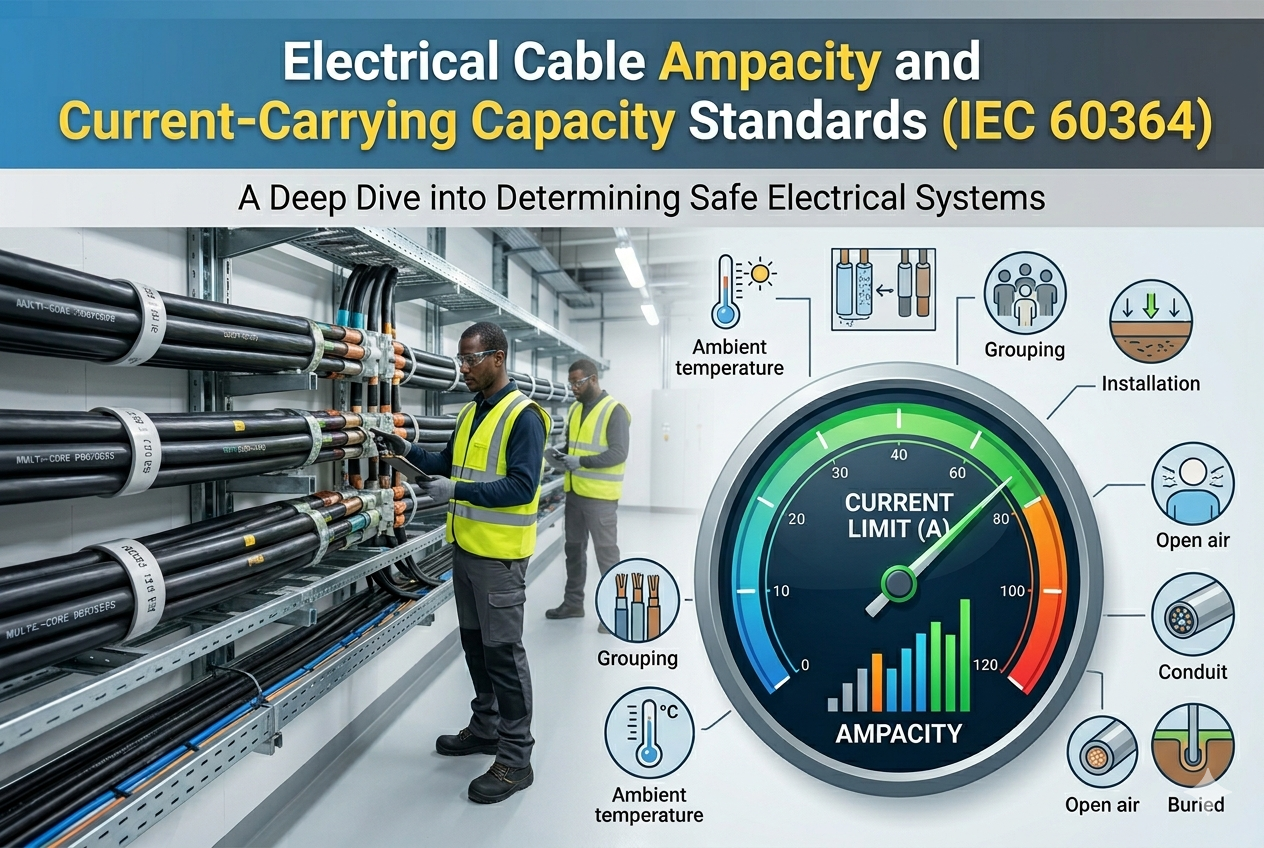
Electrical Cable Ampacity and Current‑Carrying Capacity Standards (IEC 60364)
Electrical cable sizing is not determined solely by conductor resistance or material type. Another critical factor in electrical system design is ampacity, which refers to the maximum electrical current a conductor can safely carry without exceeding its temperature rating.
Ampacity calculations are essential for ensuring safe electrical installations, preventing overheating, and maintaining system efficiency. Electrical engineers rely on internationally recognized standards such as IEC 60364 low‑voltage electrical installations standard published by the International Electrotechnical Commission when determining appropriate conductor sizes for specific electrical loads.
These standards provide engineering guidance for determining current‑carrying capacity based on installation conditions, insulation type, ambient temperature, and cable configuration.
Factors Affecting Cable Ampacity
The current‑carrying capacity of an electrical cable depends on several technical variables:
- Conductor material (Copper or Aluminum)
- Insulation type (PVC or XLPE)
- Ambient temperature conditions
- Cable installation method (conduit, tray, buried, or open air)
- Grouping of multiple cables
In high‑temperature regions such as Nigeria, ambient conditions can significantly influence cable ampacity. Elevated environmental temperatures reduce the allowable current capacity of electrical conductors, requiring engineers to apply derating factors when selecting cable sizes.
Typical Ampacity Reference for Copper Conductors
| Cable Size | Typical Current Capacity | Typical Application |
|---|---|---|
| 1.5 mm² | ~14–18 A | Lighting circuits |
| 2.5 mm² | ~20–24 A | Socket outlets |
| 4 mm² | ~28–32 A | Air‑conditioning units |
| 6 mm² | ~36–40 A | Electric cookers |
| 10 mm² | ~50–55 A | Solar and inverter distribution |
These values are typical reference ranges used in electrical design calculations and may vary depending on installation conditions and insulation ratings defined in IEC 60364 low‑voltage electrical installations standard.
Relationship to Quality and Regulatory Compliance
Ampacity calculations must be combined with other engineering considerations such as conductor resistance, insulation performance, and material quality. Manufacturers operating under the ISO 9001:2015 quality management standard ensure that electrical conductors consistently meet the technical specifications defined by international standards.
Electrical cables used in Nigerian installations must also comply with national certification frameworks administered by the Standards Organisation of Nigeria, which issues regulatory approvals under the framework of Nigerian Industrial Standards.
Importance for Electrical Engineering Projects
Understanding ampacity standards is essential for ensuring safe and efficient electrical installations in residential buildings, commercial facilities, and industrial power systems.
Proper conductor sizing based on ampacity helps engineers:
- Prevent overheating of electrical cables
- Maintain voltage stability in power systems
- Protect equipment from electrical faults
- Ensure regulatory compliance during inspections
For electrical contractors, engineers, and procurement managers, referencing international engineering standards ensures that installations meet the safety expectations defined by global electrical codes.