
Cable Insulation Performance: PVC vs XLPE in Nigerian Electrical Installations (IEC 60502‑1)
Cable insulation is a critical component of electrical conductor design because it determines the maximum operating temperature, current‑carrying capacity, and long‑term durability of electrical power cables. In modern electrical infrastructure, insulation performance directly affects system reliability, energy efficiency, and safety compliance.
Electrical engineers selecting cables for residential, commercial, and industrial installations must evaluate insulation materials based on environmental conditions, electrical load, and regulatory standards. One of the most widely referenced standards governing power cable insulation is the IEC 60502‑1 power cable insulation standard, developed by the International Electrotechnical Commission.
This standard specifies the performance requirements for low‑voltage power cables using insulation materials such as PVC (Polyvinyl Chloride) and XLPE (Cross‑Linked Polyethylene).
In Nigeria’s tropical climate—where ambient temperatures frequently range between 35°C and 45°C—the choice of insulation material plays an important role in determining safe operating conditions for electrical conductors.
PVC Insulation (70°C Rated Cables)
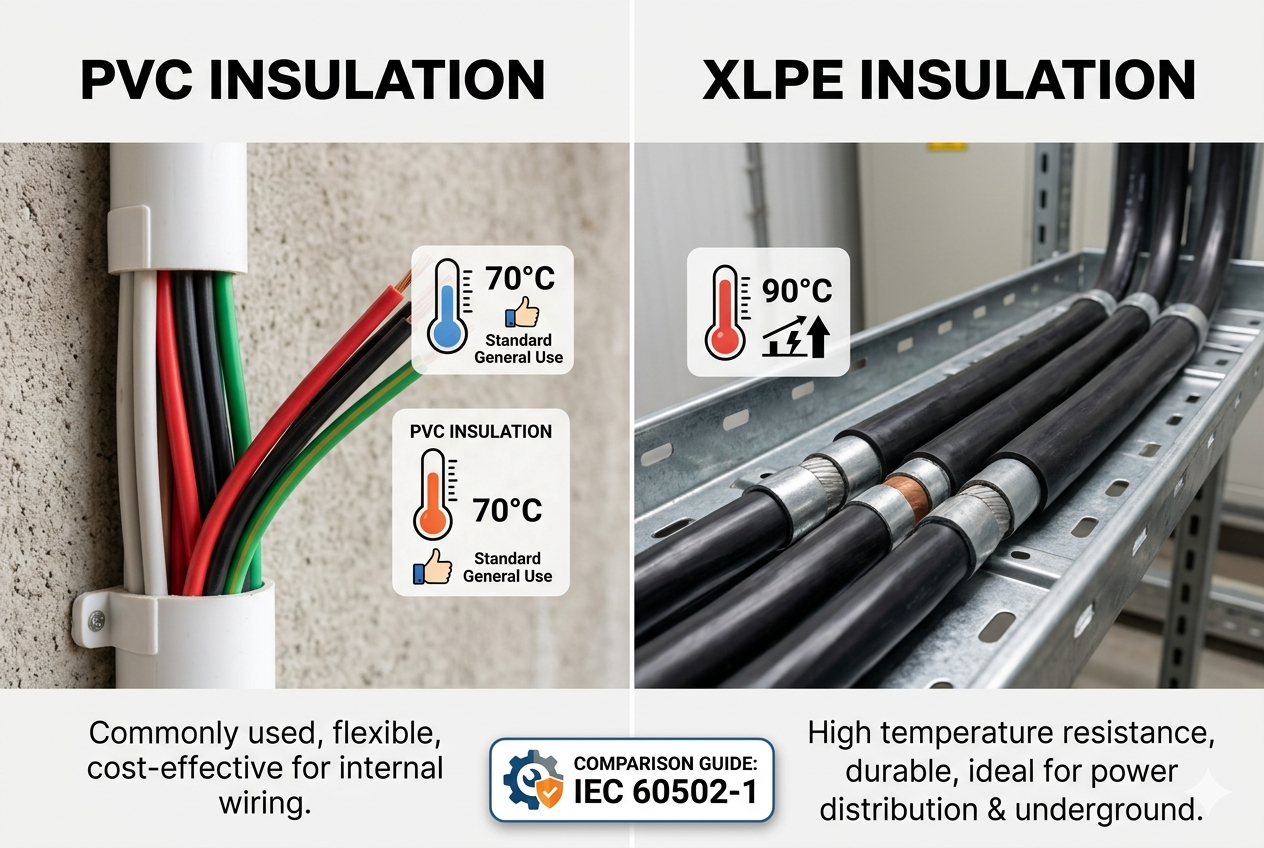
PVC insulation is one of the most widely used materials for electrical wiring due to its affordability, durability, and ease of installation. Cables insulated with PVC typically have a maximum operating temperature rating of 70°C under normal load conditions.
PVC‑insulated cables are commonly used in:
- Residential building wiring
- Lighting circuits
- Socket outlet circuits
- Low‑load commercial installations
PVC insulation provides adequate protection for many standard electrical applications and is widely accepted for building wires supplied under regulations monitored by the Standards Organisation of Nigeria.
However, PVC insulation has limitations when exposed to sustained high electrical loads or elevated ambient temperatures.
XLPE Insulation (90°C Rated Cables)
XLPE insulation represents a more advanced cable insulation technology used in higher‑performance electrical installations. Through a chemical cross‑linking process, polyethylene molecules are bonded together to form a thermally stable insulation structure.
Cables insulated with XLPE typically support operating temperatures up to 90°C, which significantly improves current‑carrying capacity and resistance to thermal stress.
XLPE‑insulated cables are commonly used in:
- Commercial power distribution systems
- Industrial electrical installations
- Solar power systems
- High‑load motors and equipment
Compared with PVC cables, XLPE cables can typically carry approximately 20–25% more electrical current under similar installation conditions.
| Property | PVC Insulation | XLPE Insulation |
|---|---|---|
| Maximum Operating Temperature | 70°C | 90°C |
| Thermal Stability | Moderate | High |
| Current Carrying Capacity | Standard | Higher |
| Typical Applications | Residential wiring | Industrial & commercial power systems |
| Cost | Lower | Higher |
Insulation Selection in Nigerian Climate Conditions
Electrical installations in Nigeria must account for high ambient temperatures and heavy electrical loads, particularly in commercial facilities and industrial environments. Selecting the correct insulation type ensures long‑term cable performance and reduces the risk of overheating.
For residential installations and standard building circuits, PVC‑insulated cables often provide sufficient performance. However, for installations involving high‑load equipment such as air‑conditioning systems, industrial motors, and solar distribution networks, XLPE insulation may provide improved safety margins and greater operational reliability.
Electrical cables supplied through Absolute Cablemart Ltd, including products manufactured by Nigerchin Limited and Zhengzhou LP Industry Co., Ltd, are produced in accordance with internationally recognized insulation standards to ensure reliable performance in demanding electrical environments.
Importance of Proper Insulation Selection
Selecting the appropriate cable insulation material is essential for maintaining safe and efficient electrical installations. Proper insulation selection supports several critical engineering objectives:
- Thermal safety by preventing overheating of conductors
- Higher current capacity for heavy electrical loads
- Improved system durability in high‑temperature environments
- Compliance with international electrical standards
For these reasons, insulation specifications defined by the IEC 60502‑1 power cable insulation standard remain a key reference for electrical engineers designing modern power distribution systems.